Let’s face it: tech doesn’t slow down for anyone. New tools, platforms and frameworks pop up faster than you can say “AI integration.” To keep up, you need more than a computer science degree—you need to be curious, flexible and ready to learn on the fly.
That’s something we think a lot about at Go Studio as the innovation hub of InComm Payments. One of our favorite ways to stay connected to fresh thinking is partnering with Kennesaw State University (KSU). We bring emerging technology projects to students that they don’t usually get to interact with in order to push them out of their comfort zones and expand their knowledge. We’ve worked together on student research, capstone projects and more, all with the goal of helping students build real-world skills and a mindset that lasts.
Recently, we caught up with a few KSU alumni who now work here at InComm Payments. We wanted to hear how their education helped them navigate the tech world and what they wish more students knew before starting their careers.
What we heard was clear: yes, the technical classes matter. But it’s the broader experiences—humanities, creative thinking, problem-solving under pressure—that really prepare you for the pace of tech.
Fast Learners Wanted
In a world where your priorities might change twice before lunch, the ability to learn fast is gold. That’s one of the first things KSU grad Alissa Beckett, now a software engineer at InComm Payments, brought up.
“When you have rapid changes, like in tech, you have to learn quickly,” she said. “So, I would think the ability to master information as fast as you can, would be probably one of the biggest things that college [taught] me.”
She pointed to courses like operating systems and programming languages—classes that gave her the base knowledge to understand new technologies as they come out, instead of being overwhelmed by them.
Jacob Dangler, another KSU alum and current InComm Payments IT configuration engineer, had a similar take. One class in particular stuck with him: Data Structures. Not only was it tough, but it also required learning the programming language C++ at the same time.
“Most people do not know C++ because there’s no reason in their right mind to just go out of their way to learn C++ for fun,” he joked. “Classes like that really force you to grow and learn and adapt.”
Fellow KSU alum Jamahl Burns—now an InComm Payments IT technical support manager—agreed with Dangler’s sentiment, saying that hands-on experience in the classroom helped make him a more adaptable professional.
“My college experience prepared me to be able to apply what I learned in the field,” he explained. “In the classroom, we were actually able to do case studies, act out different scenarios and branch off into teams to do group projects. Being able to do these things helped simulate the things that I would do in my professional career today.”
Why Creativity Belongs in Tech
Here’s something that might surprise you: every alum we spoke with emphasized how non-technical experiences helped shape their tech careers. Courses in the arts, humanities and social sciences weren’t just electives—they were essential to thinking more creatively and solving problems from new angles.
“I think it’s really important for tech people to have a broad humanities background,” said Beckett. “The more [skills] you have in the arts and humanities, the more ways you’ve trained your creativity.”
She shared an example of another university that requires computer science students to take an improv class. Why? Because it builds quick thinking, creativity and the ability to roll with new ideas in real time.
And creativity isn’t just for designers or front-end folks.
As she put it, “Technical expertise as a whole is kind of useless if you don’t have creativity in your projects. You can recite definitions and meanings…but creativity is how you actually apply [what you know].”
Dangler pointed out that many of history’s most brilliant scientists were also creatives.
“Einstein played violin,” he said. “Most of them [scientists] had some kind of creative avenue that stretched their brain. If you’re just going for a computer science degree, you’re not going to really think about that stuff. But when you have to take a course [outside your comfort zone], it makes you think differently.”
Real Mentors, Real Impact
Of course, courses are only part of the picture. Many of our alumni were deeply shaped by their professors—the ones who showed them what a career in tech could actually look like.
Beckett told us about a KSU professor who started her career as a math teacher, then switched to computer science in the 1980s.
“The college was like, hey, we need a teacher for the computer science class,” Beckett explained. “You want to do it? And she was like, yeah, sure, I’ll do it. That’s how she started her computer science career, learning how to code next to her students. I thought that was so cool.”
Dangler had a similar story. One of his professors made time to talk about what working in tech actually felt like—not just the technical work, but the different roles available and how projects
came together in the real world.
“She introduced the software development lifecycle to us,” he said, “And it actually gave life to what happens when someone wants to code something. [It showed me] all of these different [possible] jobs.”
What Colleges Can Do Right Now
So, how can universities better prepare students for this kind of work? Our alumni had some suggestions—many of which are already being explored through Go Studio’s partnership with KSU.
Here’s what they think makes the biggest difference:
- Blend disciplines: Combine tech with fields like business, ethics or the arts. Students who can zoom out and see the big picture make better problem-solvers.
- Get hands-on: Real-world projects, hackathons and group work help students learn how to apply what they know and work with others while doing it.
- Foster curiosity: Give students space to explore. Whether it’s research, side projects or experimentation, the freedom to follow an idea matters.
- Build soft skills: Teamwork. Communication. Empathy. These aren’t “extras”—they’re must-haves in modern tech roles.
Building the Future of Tech
The big takeaway? Success in tech isn’t just about how many languages you know or how clean your code is. It’s about how you think. Can you learn quickly? Can you connect ideas across disciplines? Can you bring a human-centered perspective to technical problems?
At Go Studio, our work with KSU is built around helping students answer “yes” to all of the above. By combining rigorous technical training with curiosity, creativity and real-world experience, we’re helping shape the kind of tech talent the world really needs.
And who knows? The next great innovator might not just be coding—they might also be painting, playing music or even taking improv.
If you’re a college or university interested in working with the Go Studio team, contact us or schedule a tour and we’ll show you what we’re working on.
If you’re a business who wants to talk about how your organization can implement emerging or current technologies into your strategy, schedule a consultation and we’ll walk you through what’s possible. Schedule a consultation: https://gostudio.io/tour/
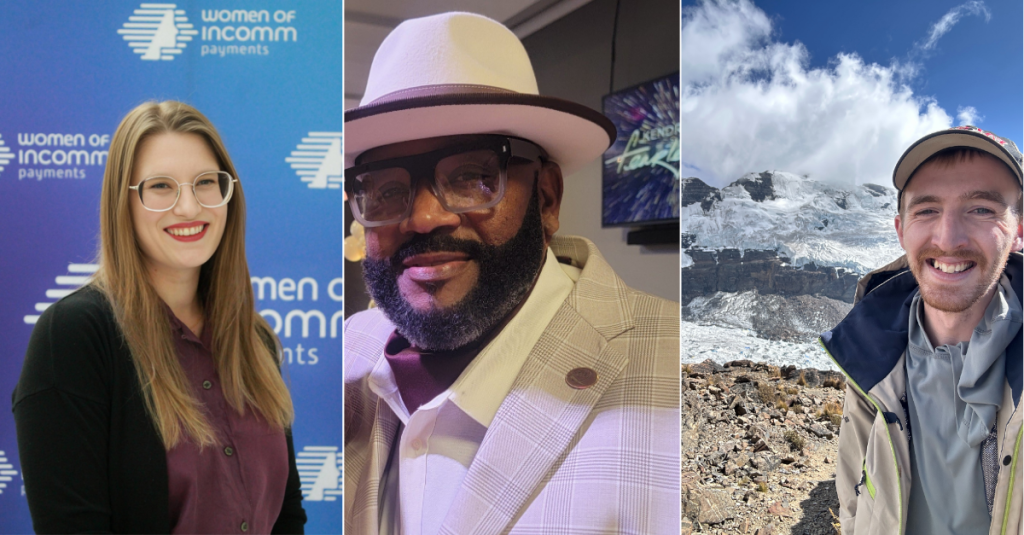
(From left to right: Alissa Beckett, Jamahl Burns, Jacob Dangler)